History of the Basilisk
Origins and evolution of the Basilisk
The Basilisk is a legendary creature of European folklore, known as the king of serpents. It is said to kill with a single glance and to emit a destructive breath. It is often described as a snake with rooster or dragon traits, depending on the variation of each tradition.
The belief dates back to antiquity. The earliest accounts come from Roman sources, such as Pliny the Elder in his «Naturalis Historia», who describes it as a small serpent with a crown —a mark of its royal status among snakes— able to kill with its gaze and to poison water. «The Basilisk is so lethal that with its mere gaze it kills men,» writes Pliny.
Its breath is said to kill plants, crack stones and dry up all living things, often interpreted as a flaming breath like that of dragons; this is why, in our country's festive theatricality, the Basilisk appears spitting fire. As the tradition spread across medieval Europe, its image evolved with larger bodies and added features such as legs and wings.
Medieval tales imagined creative ways to defeat it, such as the mirror that turns its deadly gaze back on itself. During the Renaissance it appeared in artworks and alchemical texts as a symbol of evil but also of transformation, and modern culture has kept it alive in books, films and video games.
As argued in Jordi Bertran's doctoral thesis (URV, 2024), in medieval theatricality and iconography Saint Tryphon —and the Virgin herself— were antagonists of the Basilisk, paralleling the dragon against Saint George. The scene of Saint Tryphon taming the Basilisk was painted by Vittore Carpaccio in 1507.
Cultural meaning
The meaning of the Basilisk is rich and shifting across historical and geographical contexts. It has symbolised many things, from its appearance in ancient cultures to its roles in modern folklore.
Symbolism in antiquity
Deadly power and destruction. In Roman texts, the Basilisk was feared for its ability to kill with a glance and to poison air and water, a representation of the uncontrollable forces of nature.
Monarchy and authority. Its name derives from the Greek «basiliskos», «little king», after its characteristic crown; thus the Basilisk was not only a monster but also a symbol of sovereignty and power.
Medieval and Renaissance evolution
The evil to be conquered. In the Middle Ages it was woven into Christian narratives as an embodiment of evil or the devil; its defeat symbolised the victory of good over evil.
Alchemy and transformation. In the Renaissance, its power both to kill and to heal made it a symbol of death and rebirth, essential to alchemical transformation.
The Basilisk in Catalonia
In Catalonia, the Basilisk is an important figure of popular culture. The Institut d'Estudis Catalans defines it as a fabulous animal, traditionally seen as a serpent–rooster hybrid and known for its ability to kill with its gaze.
Tradition holds that it can be born from unusual conditions —a cock's egg exposed to fire or hung in a dunghill— and that it guards tombs and hidden treasure. Joan Amades describes it guarding such treasure for years, killing with its gaze anyone who tries to steal it, unless they see it first or face it with a mirror.
Woven into Catalan festivals, the Basilisk symbolises the evil to be overcome. In the ethnographic model of the Camp de Tarragona and the Penedès, it is carried through the streets as a large zoomorphic frame borne by the participants of the seguici, reminding the community to stay vigilant against destructive forces.
Other basilisks of Catalonia
Several towns today have their own version of the Basilisk, each with distinctive features that reflect the diversity of Catalan folklore.
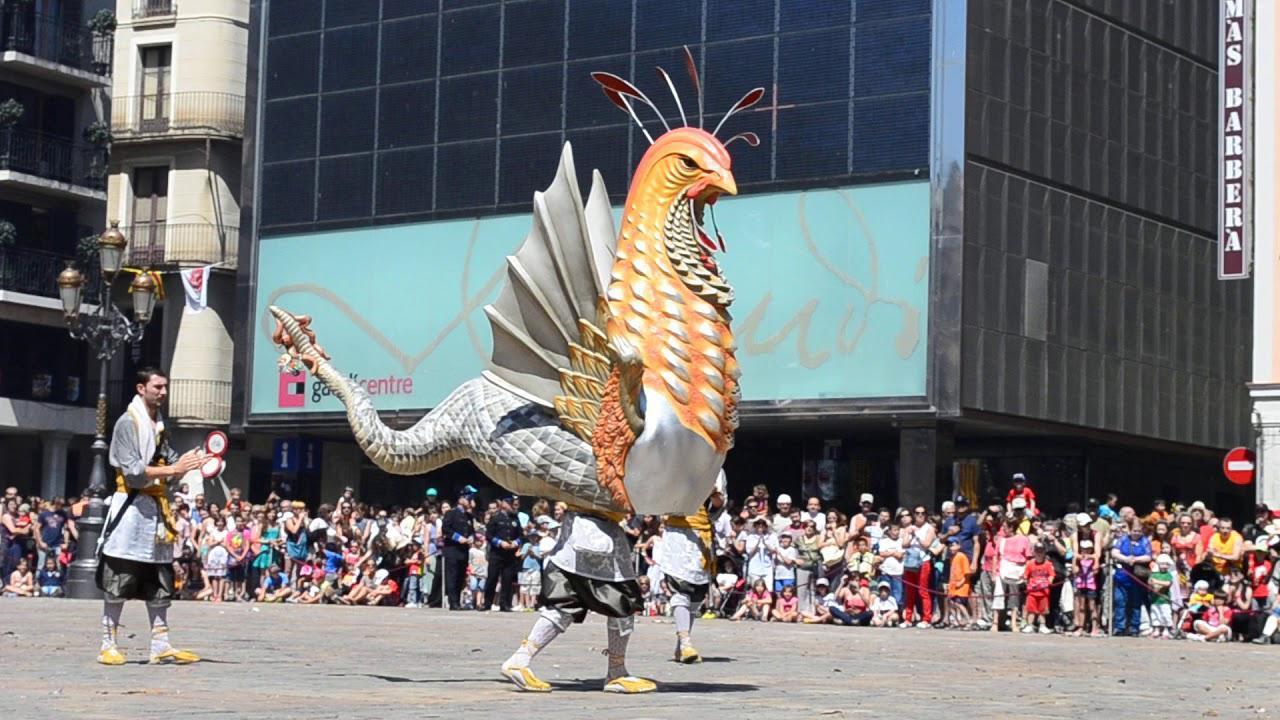
Basilisk of Reus
It made its public debut at the 2007 Festa Major de la Misericòrdia and parades each year for Sant Pere, declared a Festival of National Heritage Interest. The work of sculptor Manel Llaurador Fortuny, it joined the seguici in 2008.
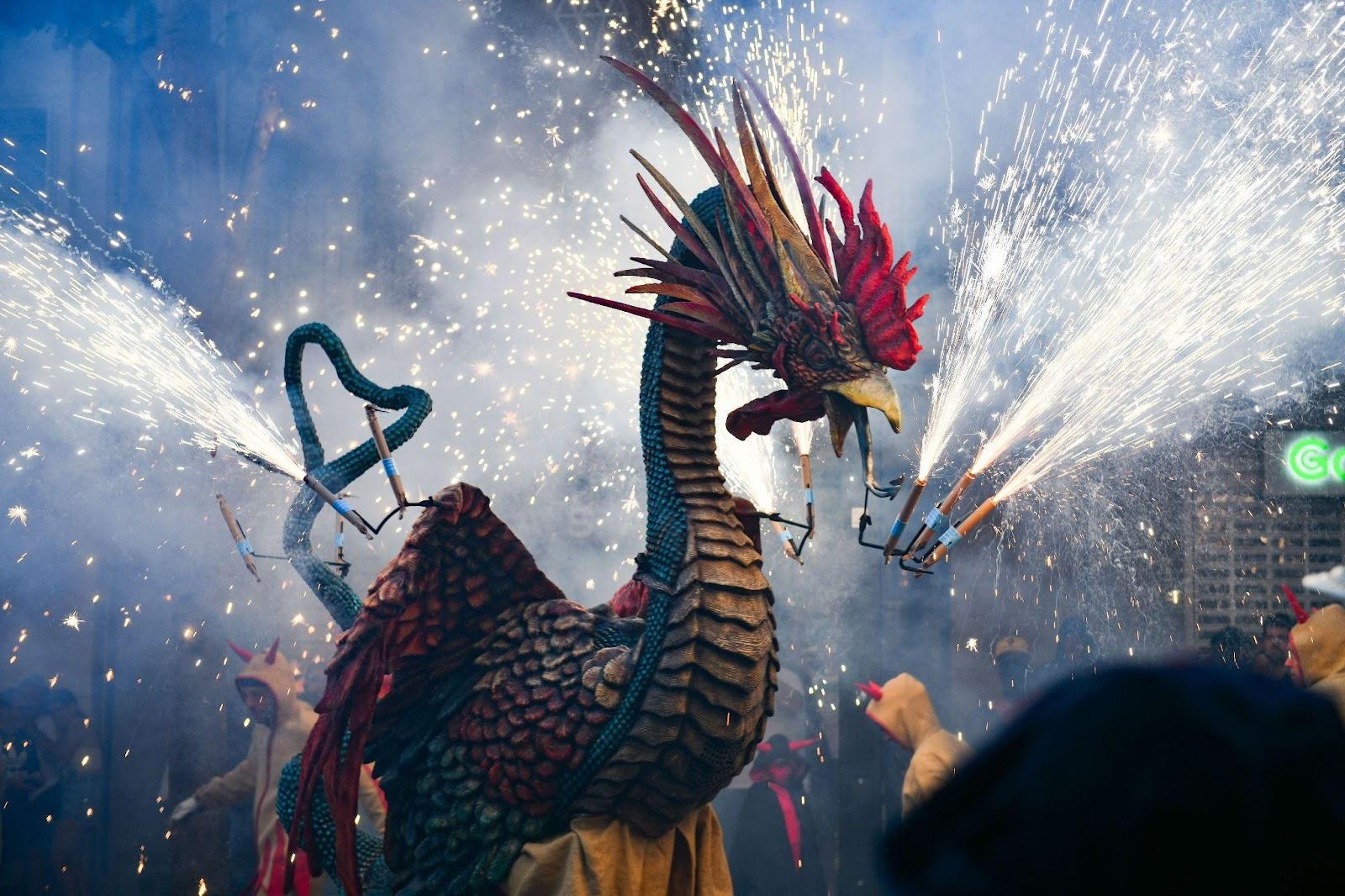
Basilisk of Mataró
Built by Dolors Sans in 2014, it parades each year for the Festa Major de les Santes, also declared a Festival of National Heritage Interest.
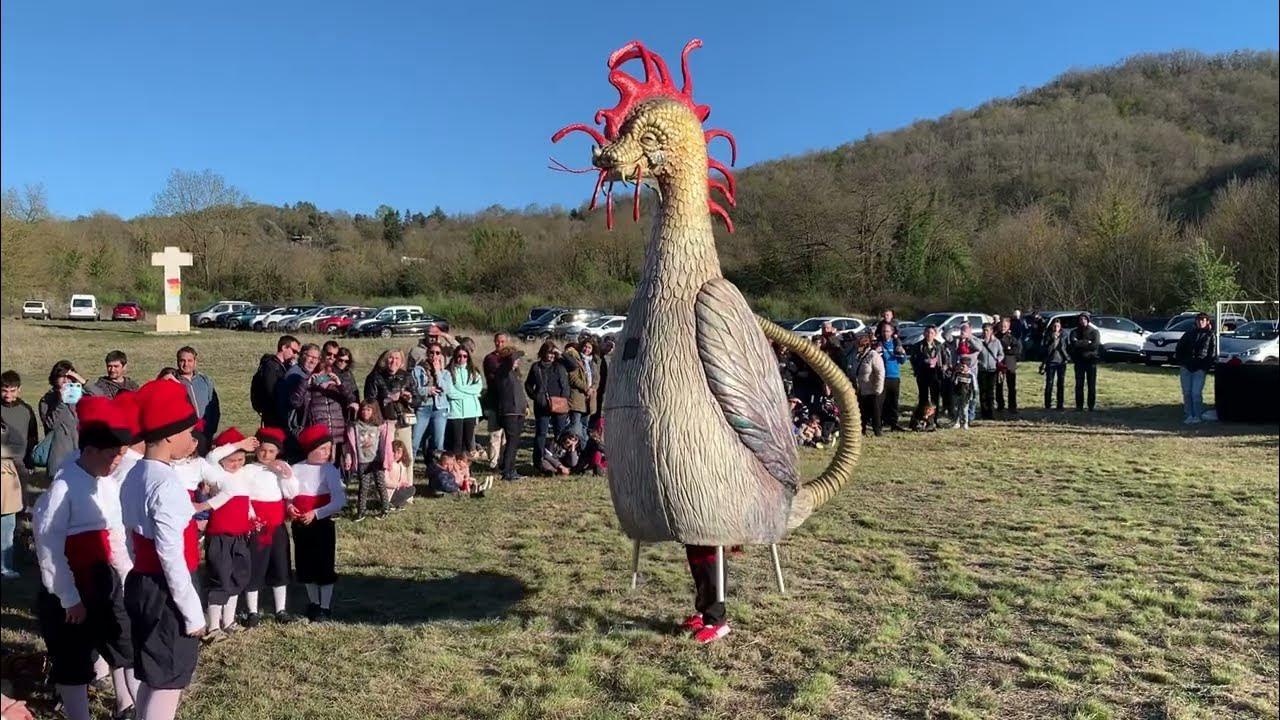
Basilisk of Olot
Known as El Gallarut, it is the Basilisk of the les Fonts neighbourhood and the oldest in Catalonia. Half rooster and half serpent, it reappears each year for the neighbourhood's festivities and for the Festes del Tura. Designed by Miquel Gou and built in 1996 by Joan Ferrés.
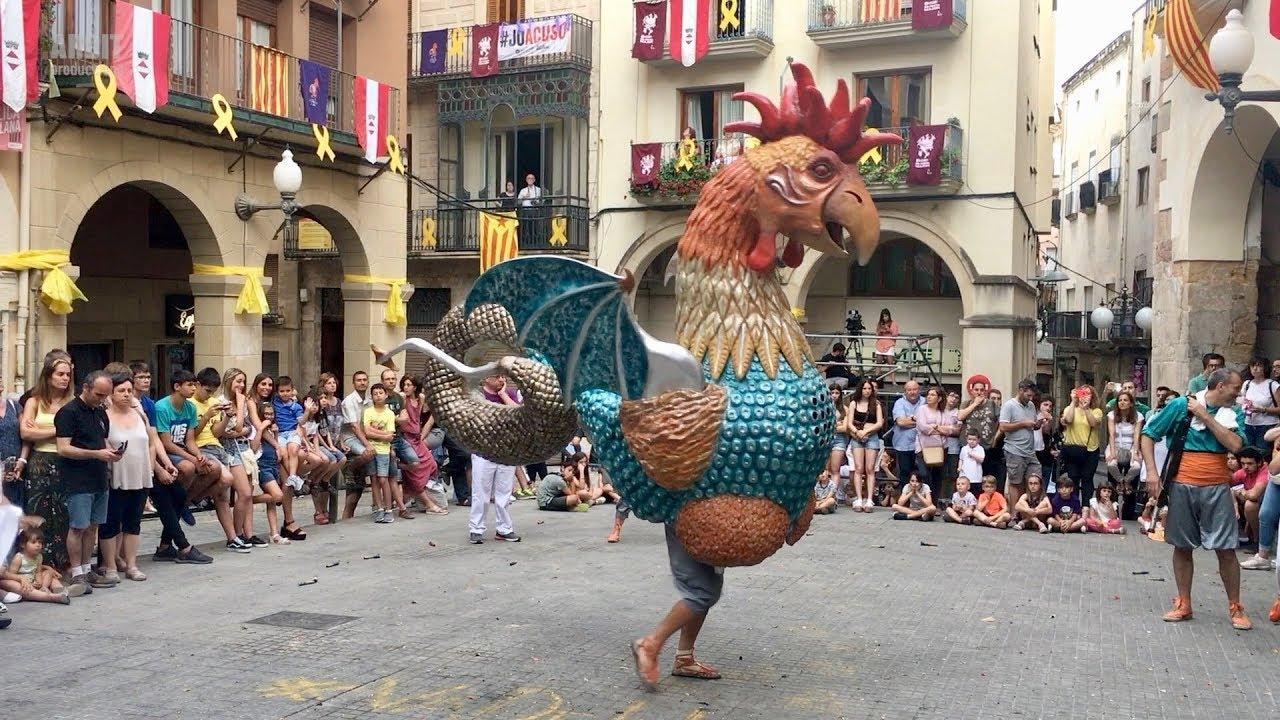
Basilisk of Valls
The work of Sergi Iglesias, it parades each year for the Festa Major de Sant Joan. Premiered in 2017 to mark the 10th anniversary of the Colla Gegantera «La Pessigolla», it joined the Seguici Cerimonial in 2018.
The Basilisk in Tarragona
The figure has a notable presence in Tarragona Cathedral (Santa Maria), built between the 12th and 14th centuries. This Romanesque and Gothic monument holds numerous reliefs, sculptures and capitals, among which the Basilisk appears in two prominent places.
The cloister capital
One of the most notable representations is a capital in the cloister, in the south-east gallery, section 2, with a serpent–rooster hybrid form typical of medieval iconography. Capitals served not only a structural function but also a symbolic and decorative one.
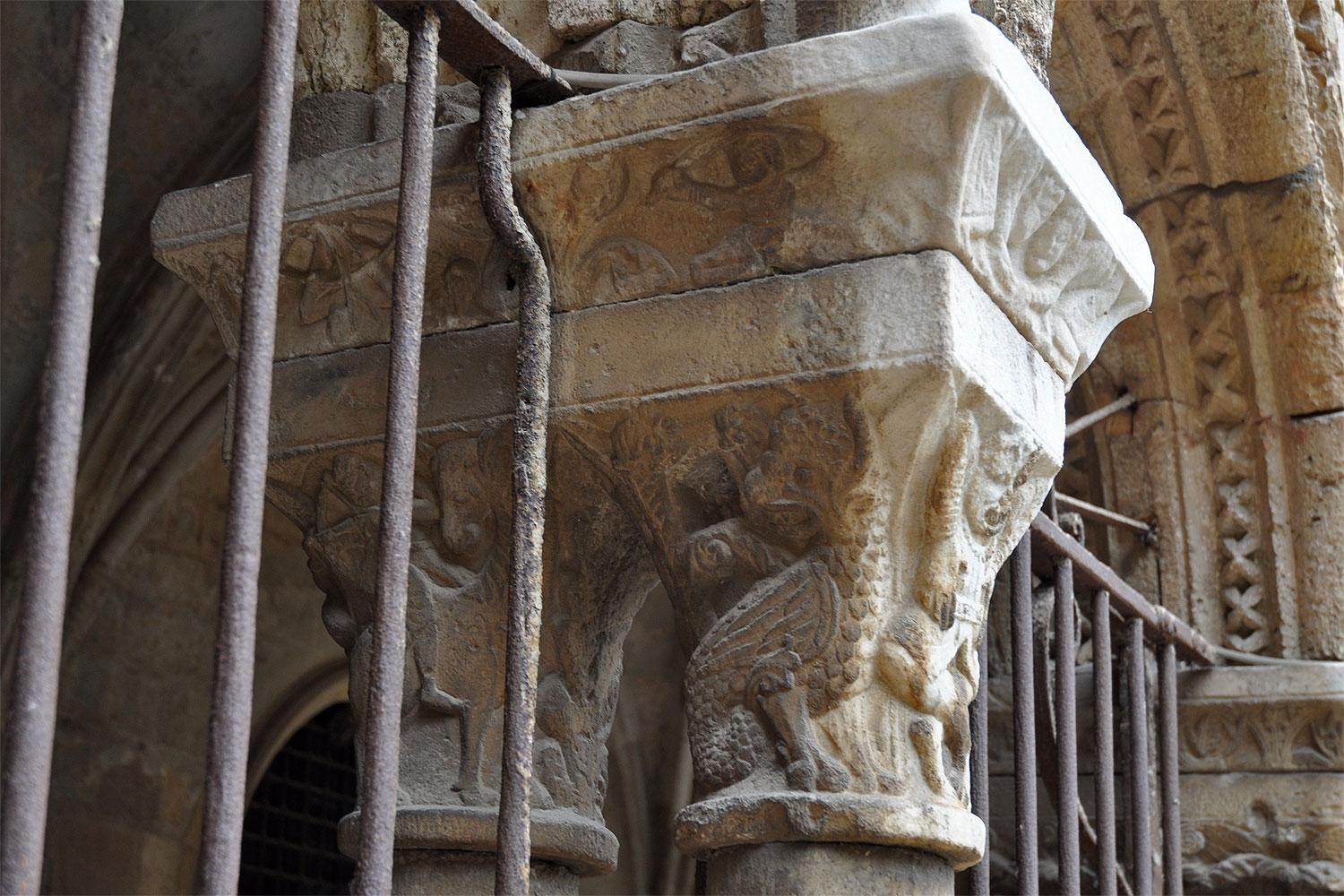
It is widely accepted that the figures in medieval temples resembled those of the Seguicis Populars and popular theatre, bearing witness to what artists saw at ritual festivals. This approach has made it possible to document the first Armats of Tarragona and to recover elements of the Seguici, such as the archangel Saint Michael of the Ball de Diables or, in 2014, the Griu de Tarragona.
The decoration of the sacristy choir-base
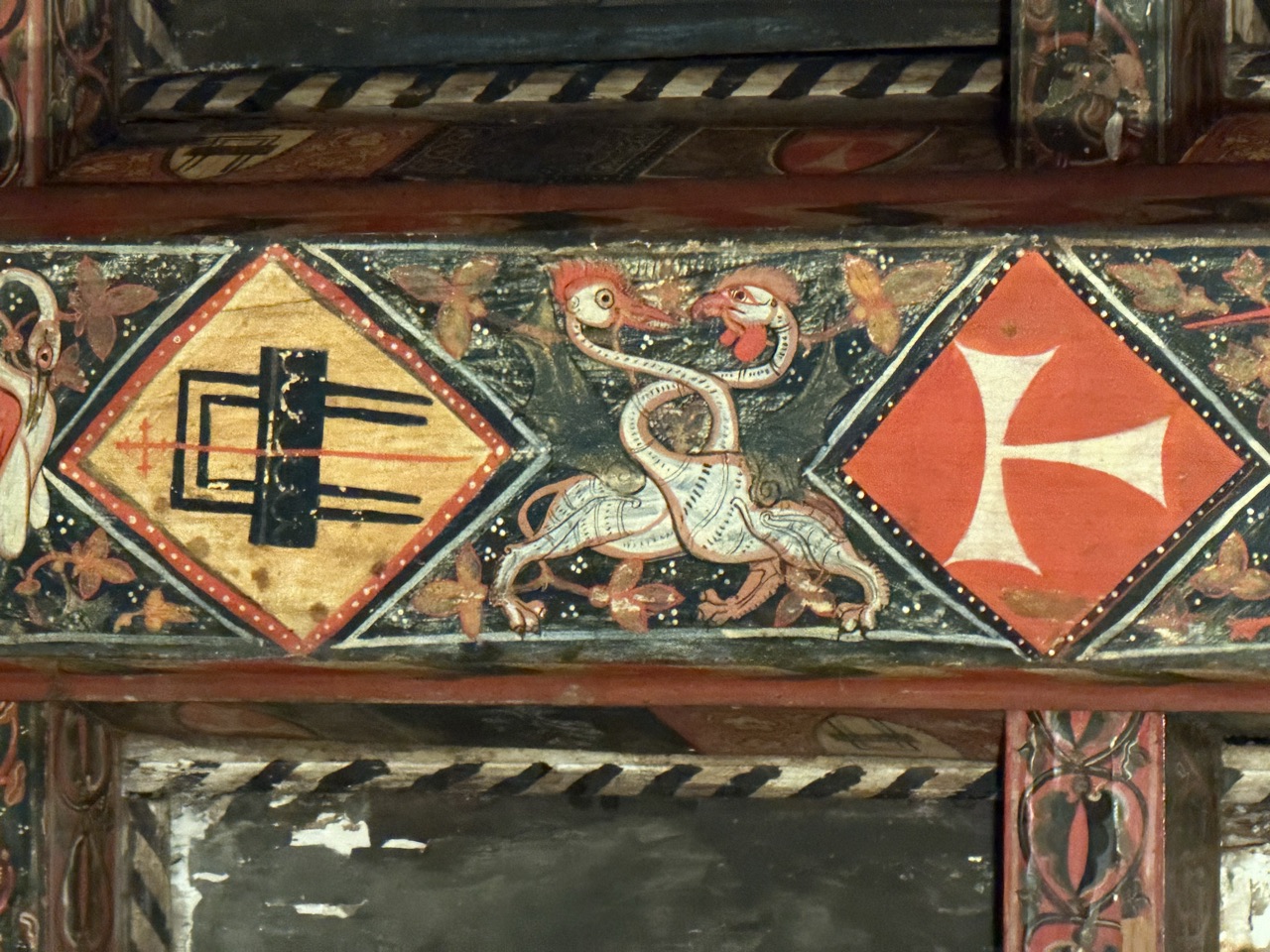
The Basilisk typology appears in two examples in the choir-base (sotacor) scenes, contemporary with the formation of the theatrical cycle of Corpus, Santa Tecla and the spectacular royal entries (Jordi Bertran, Publicacions URV, 2023).
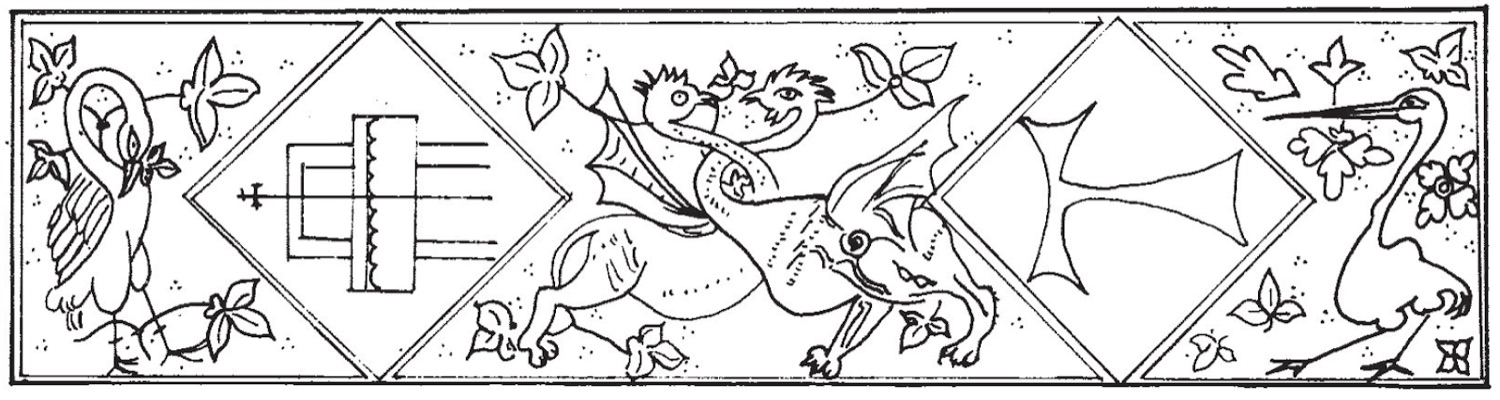
Two monsters can be made out, intertwined by the neck, with a hen's head with crest and beak, a feline body with clawed legs, green bat wings and a vegetal tail, in yellow and red tones for the sparks —a detail consistent with the device for firing pyrotechnics that the beast carried in its tail.
The cathedral's consueta of 1369 documents the urban procession of Santa Tecla, and in 1370 the ordinances of Archbishop Pere de Clasquerí regulated the seguici's participation. Between the 1321 entry and that text, the theatrical articulation of the popular elements had taken shape.
The scenes with the Basilisk appear beside the coats of arms of archbishops Sancho López de Ayerbe and Pere de Clasquerí, key figures in the origin of Corpus and Santa Tecla. The Seguici Popular in which the Basilisk paraded did so under their patronage, in a period between 1347 and 1380.
The meaning of the depictions
According to Dr Antoni Conejo (University of Barcelona), the Tarragona scenes were not chosen at random but in response to the liturgical and festive intensification of the cathedral from the second quarter of the 14th century. The Basilisk's presence underlines its symbolic importance and the connection between the popular seguici and the cathedral's sculpted figures.
With its associations of danger and protection, the Basilisk becomes a symbol of the battle between good and evil, a recurring theme in medieval art and religion.
The recovery project
Associació La Salle Tarragona, with the schools of Sant Pere i Sant Pau and Torreforta, is driving the recovery of the Basilisk to bring it into the city's Seguici Popular. With it, Tarragona would be the only city in Europe with a complete bestiary: Dragon, Ox, Víbria, Griffin, Eagle, Mulassa, Cucafera, Lion and Basilisk.